

Determining the number of links in a Heavy Duty Series Roller Chain is a crucial step in ensuring the proper functioning and longevity of your machinery. As a supplier of Heavy Duty Series Roller Chains, I understand the importance of getting this right. In this blog post, I'll share some insights on how to accurately determine the number of links for your specific application.
Understanding the Basics of Heavy Duty Series Roller Chains
Heavy Duty Series Roller Chains are designed to handle high loads and harsh operating conditions. They consist of inner and outer plates, pins, bushings, and rollers. These components work together to transmit power efficiently between sprockets. The strength and durability of these chains make them ideal for a wide range of industrial applications, such as conveyors, agricultural machinery, and mining equipment.
Factors Affecting the Number of Chain Links
Several factors need to be considered when determining the number of links in a Heavy Duty Series Roller Chain:
1. Sprocket Size and Teeth Count
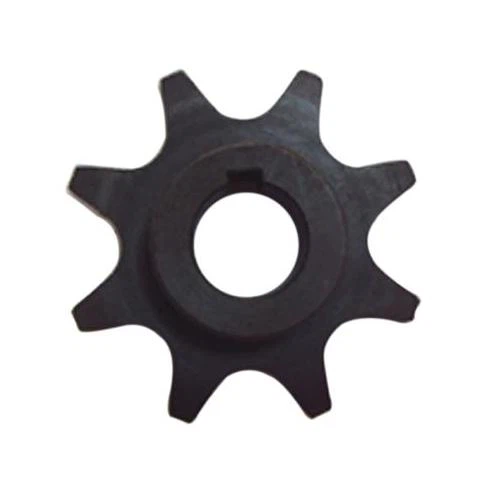
The size and number of teeth on the sprockets play a significant role in determining the chain length. The chain must wrap around the sprockets smoothly, and the pitch (the distance between consecutive pins) of the chain should match the pitch of the sprockets. A larger sprocket with more teeth will require a longer chain compared to a smaller sprocket with fewer teeth.
2. Center Distance between Sprockets
The center distance is the distance between the centers of the two sprockets. A greater center distance will generally require more chain links. However, it's important to note that an excessive center distance can lead to chain sag, which can cause premature wear and reduce the efficiency of the power transmission.
3. Application Requirements
The specific requirements of your application, such as the speed of operation, the load capacity, and the operating environment, can also affect the number of chain links. For example, in high-speed applications, a shorter chain may be preferred to reduce vibration and noise. In applications with heavy loads, a stronger chain with a larger pitch may be required, which can also impact the number of links.
Calculating the Number of Chain Links
There are several methods to calculate the number of chain links, but one of the most common approaches is as follows:
Step 1: Measure the Center Distance (C)
Use a measuring tool to determine the center distance between the two sprockets. Make sure to measure accurately, as even a small error can affect the chain length.
Step 2: Determine the Number of Teeth on Each Sprocket (N1 and N2)
Count the number of teeth on the driving sprocket (N1) and the driven sprocket (N2).
Step 3: Calculate the Approximate Chain Length (L)
The approximate chain length can be calculated using the following formula:
[L \approx 2C+\frac{\pi}{2}(D_1 + D_2)+\frac{(D_2 - D_1)^2}{4C}]
where (D_1=\frac{N_1p}{\pi}) and (D_2=\frac{N_2p}{\pi}), and (p) is the pitch of the chain.
Step 4: Adjust the Chain Length to an Even Number of Links
The chain length should be an even number of links to ensure proper engagement with the sprockets. If the calculated chain length is not an even number, round it up or down to the nearest even number.
Step 5: Check for Chain Sag
After determining the number of links, it's important to check for chain sag. The chain should have a slight sag (usually around 2 - 3% of the center distance) to allow for proper tensioning and to prevent excessive wear. If the sag is too large or too small, you may need to adjust the number of links or the center distance.
Importance of Proper Chain Length
Using the correct number of chain links is essential for the following reasons:
1. Efficient Power Transmission
A properly sized chain ensures smooth and efficient power transmission between the sprockets. This reduces energy losses and improves the overall performance of the machinery.
2. Reduced Wear and Tear
An accurately sized chain experiences less stress and wear, which extends its lifespan and reduces the need for frequent replacements.
3. Safety
A chain that is too short or too long can pose a safety hazard. A short chain may cause excessive tension, leading to chain breakage, while a long chain can sag and get caught in moving parts.
Additional Considerations
In some applications, you may need to use special types of chains, such as Side Bow Chains or Double Pitch Conveyor Chain Sprocket. These chains have unique characteristics and may require different calculation methods. It's important to consult the manufacturer's specifications and guidelines when using these chains.
Conclusion
Determining the number of links in a Heavy Duty Series Roller Chain is a critical process that requires careful consideration of several factors. By understanding the basics of chain design, calculating the chain length accurately, and considering the specific requirements of your application, you can ensure the proper functioning and longevity of your machinery.
As a supplier of Heavy Duty Series Roller Chains, we have the expertise and experience to help you select the right chain for your needs. If you have any questions or need assistance in determining the number of chain links for your application, please feel free to contact us. We are committed to providing high-quality products and excellent customer service to meet your requirements.

References
- "Chain Drives: Selection, Installation, and Maintenance," Industrial Press Inc.
- "Power Transmission Handbook," McGraw - Hill Education.


