


Conveyor Chains

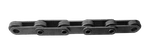
Conveyor chains are chain devices used for continuous material conveying, widely applied in manufacturing, logistics and warehousing, agriculture, mining, and other fields. Their core function is to transport materials from one place to another through the cyclic movement of the chain. Compared with transmission chains, conveyor chains focus more on load-bearing capacity, operational stability, and adaptability to different materials, with more diverse structures and types.


Your Professional Conveyor Chains Supplier!
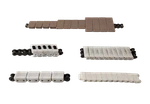
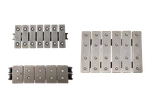
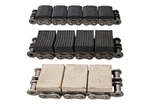
Suzhou New Ball Conveyor Chain Manufacturing Co., Ltd. was established in 2000 and is a manufacturer specializing in the production of conveyor chains and special chains. Our main products include Speed-fold chains, Drive chains, Conveyor chains, Conveyor chains with outboard rollers, Conveyor chains with top rollers, Roller chains with roof attachments, Side bow chains, Articulated bottomplate chains, Leaf chains, Hollow pin chains and other kinds of special chains , sprockets.
Why Choose Us
Advanced Equipment
We possess a complete production line and in-house testing equipment to ensure stable manufacturing processes and consistent product quality for various chain types and specifications.
Quality Control
Our products are manufactured according to ISO, ANSI, DIN, and JIS standards, ensuring compatibility with global equipment systems and seamless integration into existing applications.
Customized Services
Before production begins, we conduct a comprehensive review of the technical parameters provided by our customers. We customize the chain structure, dimensions, and accessory configurations based on specific conveying and transmission requirements to meet the demands of diverse application scenarios.
Comprehensive Product Range
We offer a complete range of conveyor and transmission chains, including roller chains and chains with special attachments, to meet the needs of material handling, transportation, and various industrial applications.
Specification
|
Newball |
Pitch |
Width |
Roller |
Pin dimension |
Inner |
Plate |
Ultimate |
Average |
Ultimate |
Average |
||
|
P |
B |
d1 |
d2 |
L |
LC |
h2 |
t/T |
Qmin |
Qo |
Qmin |
Qo |
|
|
mm |
KN |
KN |
||||||||||
|
Single row |
Triple row chain |
|||||||||||
|
08A |
12.7 |
Customizable |
7.95 |
3.96 |
Customizable |
12 |
1.5 |
14.1 |
18.6 |
28.2 |
37.2 |
|
|
10A |
15.875 |
10.16 |
5.08 |
15.09 |
2.0 |
22.2 |
31.3 |
44.4 |
62.6 |
|||
|
12A |
19.05 |
11.91 |
5.94 |
18 |
2.4 |
31.8 |
43.2 |
63.6 |
86.4 |
|||
|
16A |
25.4 |
15.88 |
7.92 |
24 |
3.2 |
56.7 |
74.3 |
113.4 |
148.6 |
|||
|
20A |
31.75 |
19.05 |
9.53 |
30 |
4.0 |
88.5 |
107.6 |
177.0 |
215.2 |
|||
|
24A |
38.1 |
22.23 |
11.1 |
35.7 |
4.8 |
127.0 |
163.1 |
254.0 |
326.2 |
|||
|
28A |
44.45 |
25.40 |
12.7 |
41 |
5.6 |
172.4 |
222.5 |
344.8 |
445.0 |
|||
|
32A |
50.8 |
28.58 |
14.27 |
47.8 |
6.4 |
226.8 |
266.9 |
453.6 |
533.8 |
|||
|
|
|
|
|
|
|
|
|
|
|
|||
|
08B |
12.7 |
8.51 |
4.45 |
11.8 |
1.6 |
18.0 |
19.4 |
32.0 |
38.7 |
|||
|
10B |
15.875 |
10.16 |
5.08 |
14.7 |
1.7 |
22.4 |
27.5 |
44.5 |
56.2 |
|||
|
12B |
19.05 |
12.07 |
5.72 |
16 |
1.8 |
29.0 |
32.2 |
57.8 |
66.1 |
|||
|
16B |
25.4 |
15.88 |
8.28 |
21 |
4/3 |
60.0 |
77.1 |
106.0 |
152.1 |
|||
|
20B |
31.75 |
19.05 |
10.19 |
26.4 |
4.5/3.5 |
95.0 |
112.8 |
170.0 |
229.0 |
|||
|
24B |
38.1 |
25.40 |
14.63 |
33.2 |
6/4.8 |
160.0 |
178.0 |
280.0 |
319.2 |
|||
|
28B |
44.45 |
27.94 |
15.9 |
36.7 |
7.5/6 |
200.0 |
236.4 |
360.0 |
406.8 |
|||
|
32B |
50.8 |
29.21 |
17.81 |
42 |
7/6 |
250.0 |
277.5 |
450.0 |
508.5 |
|||
Advantages Of Conveyor Chains
Fatigue Strength
These are powered by sprockets and consist of multiple components such as pins, bushings, plates, and rollers. They are rotated by plates. A conveyor chain's ability to withstand repeated loads over an extended length of time is referred to as its fatigue strength, and it is one of the most crucial factors that decides whether or not the chain will break.
Tensile Strength
A conveyor chains's tensile strength is an indicator of its capacity to support particular loads before it snaps. This capacity is measured in pounds per square inch. Working load is an additional crucial measure of strength that is essential for conveyor chains. When doing this computation, consideration was given to a variety of contextual elements, including the chain's size, its working environment, and its application.


Temperature Resistance
Conveyor chains are frequently utilised in applications that require tolerance to high temperatures. This is of the utmost importance in certain sectors, such as the food processing industry, where the supply chain must be able to function normally despite being exposed to high temperatures without being damaged.
A Resistance To Wear
Because of the way they are constructed, conveyor chains are subjected to high levels of impact and surface pressure; as a result, it is vital to select acceptable materials and apply appropriate heat treatments in order to produce material with appropriate case hardness and case depth.
Conveyor Chains Components
Inner Link Plates
These inner plates form the chain's backbone, holding everything together.
01
Outer Link Plates
The outer link plates connect the inner link plates and rollers.
02
Rollers
These cylindrical components reduce friction during operation.
03
Bushings
Bushings separate the inner and outer link plates, allowing for articulation.
04
Pins
These connect the inner and outer link plates, holding the chain together.
05
Applications of Conveyor Chains
Conveyors: The automotive, packaging, and food and beverage industries use conveyor systems featuring conveyor chains to help with material handling and transportation.
Food and Beverage Processing: Several food and beverage processing equipment use conveyor chains, such as bottling and canning machines and bakery and confectionery equipment. Stainless steel and nickel plated chains are available for corrosion resistance.
Agriculture and Forestry: Conveyor chains are used in combines, tractors, harvesters, and other agricultural and forestry equipment.
Packaging: Packaging machinery use conveyor chains for sealing, labeling, and filling.
Mining: Most mining equipment relies on conveyor chains, including crushers, conveyor systems, and drilling rigs.
Oil and Gas: Conveyor chains are used in oil and gas equipment, such as pumps, compressors, and drilling rigs.
Warehousing and Storage: Forklifts use industrial leaf chains when lifting pallets and other heavy objects. Automated guided vehicles benefit from the use of roller chains.
Conveyor Chains Maintaining
Regular Inspection
Inspect your conveyor chains for signs of wear, such as excessive elongation, damaged rollers, or loose pins.
Cleaning
Regularly clean your conveyor chains to remove dirt, debris, and old lubricant. Use a degreaser specifically designed for conveyor chains and follow the manufacturer's instructions.
Lubrication
Proper lubrication is vital for reducing friction and wear. Use a high-quality conveyor chains lubricant recommended for your specific conveyor chains type and application. Apply lubricant at regular intervals, following the manufacturer's recommendations.
Adjustment
Over time, conveyor chains can stretch slightly. It's crucial to adjust the conveyor chains tension periodically to prevent excessive wear and potential derailment.
Customization Services
To better meet the diverse needs of different industries and customers, we can tailor conveyor chains professional solutions to your specific application scenarios and special requirements. For further information or support, please feel free to contact us.
Packaging and Shipping
|
Packaging |
Wooden box, PE film |
|
Transportation methods |
Road transport, rail transport, sea transport, air transport |
Our Certificate


FAQ