

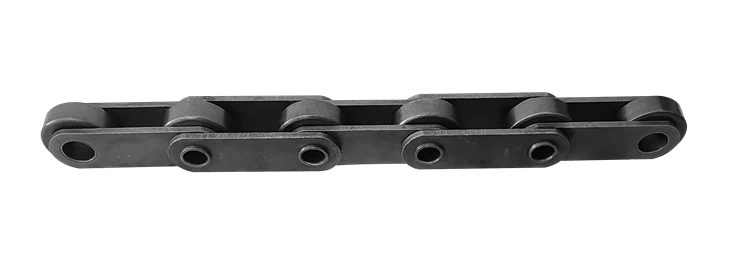
Hey there! As a supplier of Hollow Pin Chains, I've gotten a bunch of questions about what types of lubricants are suitable for these chains. So, I thought I'd put together this blog post to share some insights.
First off, let's understand why lubrication is so important for Hollow Pin Chains. These chains are often used in conveyor systems and other industrial applications where smooth operation is key. Without proper lubrication, the chains can experience increased friction, wear and tear, and even corrosion over time. This can lead to reduced efficiency, more frequent breakdowns, and ultimately, higher maintenance costs.
Now, let's dive into the different types of lubricants that are suitable for Hollow Pin Chains.
Mineral Oil - Based Lubricants
Mineral oil - based lubricants are probably the most commonly used type of lubricant for chains. They're relatively inexpensive and widely available. These lubricants work well in normal operating conditions where the temperature and load aren't too extreme.
One of the advantages of mineral oil - based lubricants is their good lubricating properties. They can form a thin film on the chain's surface, reducing friction between the moving parts. This helps to extend the chain's lifespan and keep it running smoothly.
However, mineral oil - based lubricants do have some limitations. They tend to break down at high temperatures, which means they may not be suitable for applications where the chain operates in a hot environment. Also, they're not very resistant to water and can wash off easily in wet conditions.
Synthetic Lubricants
Synthetic lubricants are a step up from mineral oil - based ones. They're formulated using synthetic base oils and additives, which give them superior performance in a variety of conditions.
Synthetic lubricants have excellent high - temperature stability. They can withstand much higher temperatures than mineral oil - based lubricants without breaking down. This makes them ideal for applications where the chain is exposed to heat, such as in some manufacturing processes or near furnaces.
Another great thing about synthetic lubricants is their resistance to water and chemicals. They can form a durable protective film on the chain, even in wet or corrosive environments. This helps to prevent rust and corrosion, which can significantly damage the chain.
The downside of synthetic lubricants is that they're usually more expensive than mineral oil - based lubricants. But considering their long - term benefits, such as reduced maintenance and longer chain life, the extra cost can be worth it.
Grease - Based Lubricants
Grease - based lubricants are another option for Hollow Pin Chains. Grease is a semi - solid lubricant that consists of a base oil and a thickening agent.
One of the main advantages of grease is its ability to stay in place. Unlike liquid lubricants, grease doesn't drip or run off easily. This makes it suitable for applications where the chain is in a hard - to - reach location or where there's a risk of the lubricant being splashed away.
Grease also provides good protection against wear and corrosion. It can form a thick layer on the chain's surface, which helps to keep dirt and debris out. However, grease can be a bit messy to apply, and it may need to be reapplied less frequently compared to liquid lubricants.
Biodegradable Lubricants
In recent years, there's been a growing demand for environmentally friendly lubricants. Biodegradable lubricants are made from natural or renewable resources and can break down in the environment over time.
These lubricants are a great option for applications where environmental impact is a concern, such as in food processing or outdoor equipment. They offer similar lubricating properties to traditional lubricants but with a lower environmental footprint.
However, biodegradable lubricants may not be as widely available as other types, and they can sometimes be more expensive. Also, their performance may not be as good as synthetic lubricants in extreme conditions.
When choosing a lubricant for your Hollow Pin Chains, there are a few factors you need to consider.
Operating Conditions
As mentioned earlier, the temperature and environment where the chain operates play a big role in determining the right lubricant. If the chain is exposed to high temperatures, a synthetic lubricant would be a better choice. For wet or corrosive environments, look for a lubricant with good water and chemical resistance.
Load and Speed
The load and speed at which the chain operates also affect the lubricant selection. High - load applications may require a lubricant with better film strength to prevent metal - to - metal contact. Similarly, high - speed chains need a lubricant that can maintain its properties under high - speed conditions.
Compatibility
It's important to make sure the lubricant is compatible with the chain material. Some lubricants may react with certain metals or coatings, causing damage to the chain. Always check the manufacturer's recommendations for lubricant compatibility.
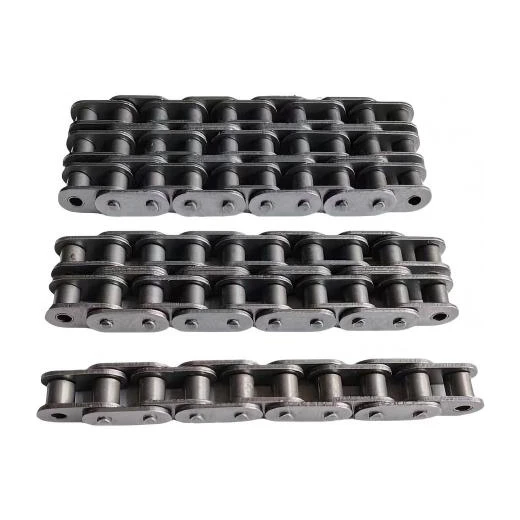
At our company, we offer a wide range of Hollow Pin Chains suitable for different applications. We also have a team of experts who can help you choose the right lubricant for your specific needs. Whether you need Roller Chains with Straight Side Plates or Multiple Strands Special Roller Chains, we've got you covered.
If you're in the market for Hollow Pin Chains or need advice on lubrication, don't hesitate to reach out. We're here to help you make the best choice for your business and ensure your chains perform at their best for years to come.
References
- "Industrial Chain Handbook", published by a leading industry association.
- Technical papers from lubricant manufacturers on chain lubrication.


