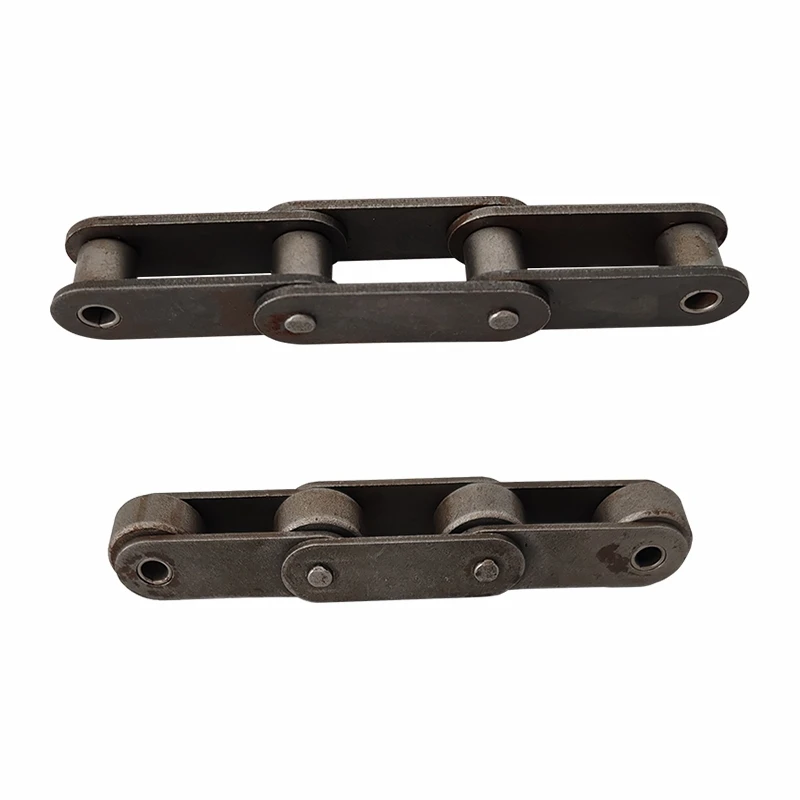
I. Core Steps in Conveyor Chain Maintenance
1. Regular Cleaning
The chain surface is prone to accumulating dust, oil, and other impurities. Clean it weekly with a soft-bristle brush or compressed air. Stubborn stains can be removed with kerosene or a specialized cleaning agent (such as LOCTITE 7063). Avoid using strong acids or alkalis that may corrode the chain. After cleaning, dry the chain thoroughly to prevent rust.
2. Effective Lubrication
- Lubrication Interval: Lubricate light-loaded chains every 8 hours; heavy-loaded chains every 4 hours (refer to GB/T 14212-2019 Chain Drive Lubrication Specification).
- Lubricant Selection: A synthetic lubricant with an ISO VG 100-150 viscosity grade (such as Mobil SHC 634) is recommended. Grease containing molybdenum disulfide should be used for high-temperature environments.
- Lubrication Method: Use a drip or spray method to ensure that the lubricant penetrates the gap between the roller and bushing. Avoid excessive application, which may attract dust.
3. Tension Adjustment
Chain sag should be controlled within 2%-4% of the center distance. For example, for a chain with a sprocket center distance of 1 meter, a sag of 20-40mm is ideal. Overtightening increases wear, while overloosening can cause tooth skipping. Use a tension gauge (such as the SKF TKBA 10) for accurate measurement.
II. Key Maintenance and Troubleshooting
1. Wear Monitoring
- Elongation Test: A chain must be replaced if it elongates by more than 3% of its original length (e.g., a 10-link standard chain should have a length of 150mm; if measured ≥154.5mm, the chain is scrapped).
- Pin and Roller Inspection: Replace any visible cracks or diameter wear exceeding 5% (refer to the "JB/T 8820-2018 Conveyor Chain Standard").
2. Common Problem Solving
- Tooth Skipping: Check the sprocket tooth profile for wear. If the tooth tip becomes pointed (angle >35°), replace the sprocket.
- Abnormal noise: This is usually caused by insufficient lubrication or bearing damage. Prioritize relubrication. If this is ineffective, disassemble and inspect the bearings.
- Corrosion: For humid environments, it is recommended to use stainless steel chains (such as 304/316) or nickel-plated chains.
III. Advanced Techniques for Extending Chain Life
1. Environmental Adaptation
- For high-temperature environments (>80°C), use heat-resistant chains (such as ANSI 35H-1) with high-temperature grease (such as Shell Gadus S2 V220).
- For the food industry, use FDA-certified chains (such as the Rexnord 3990 series). Avoid using chemical solvents during cleaning.
3. Automated Maintenance
Install an intelligent monitoring system (such as the SENSOR CHAIN SC-200) to provide real-time feedback on chain temperature and vibration data, providing early warning of potential failures.
These methods can significantly reduce the risk of downtime. For example, after a certain automobile assembly line implemented regular lubrication and intelligent monitoring, its chain failure rate dropped by 42% (data source: "2023 Industrial Conveyor Systems White Paper"). Maintenance is not just a cost; it's an investment in efficiency!